History of Bonsai
Although the word ‘Bon-sai’ is Japanese, the art it describes originated in the Chinese empire. By the year 700 AD the Chinese had started the art of ‘pun-sai’ using special techniques to grow dwarf trees in containers.
Originally only the elite of the society practiced pun-tsai with native-collected specimens and the trees where spread throughout China as luxurious gifts. During the Kamakura period, the period in which Japan adopted most of China’s cultural trademarks, the art of growing trees in containers was introduced into Japan. The Japanese developed Bonsai along certain lines due to the influence of Zen Buddhism and the fact that Japan is only 4% the size of mainland China. The range of landscape forms was thus much more limited. Many well-known techniques, styles and tools were developed in Japan from Chinese originals. Although known to a limited extent outside Asia for three centuries, only recently has Bonsai truly been spread outside its homelands.
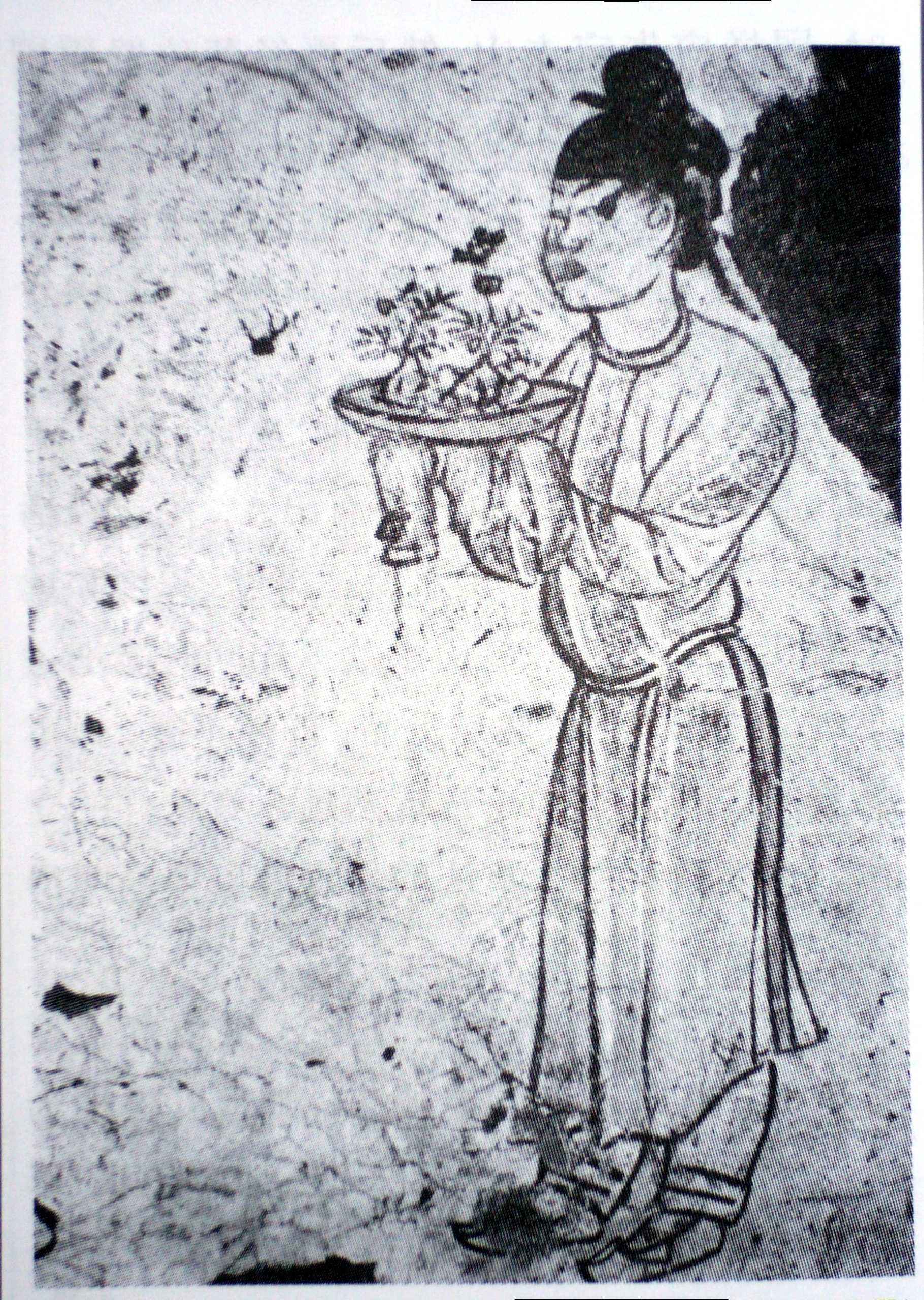
The earliest known graphic depiction of Chinese pen zai or penjing is a 706 CE wall mural discovered in the Tang Dynasty tomb of Crown Prince Zhang Huai at the Qianling Mausoleum site.
History of Bonsai in China
Bonsai traces its roots to ancient China, where the art began as penjing (also spelled penzai) more than 2,000 years ago during the Han Dynasty (206 BCE to 220 CE). Unlike modern bonsai, penjing focused on creating miniature landscapes that captured the beauty and spirit of nature. Artists carefully shaped trees, rocks, and plants in shallow containers to represent mountains, forests, and natural scenery.
Penjing was deeply influenced by Taoist philosophy, which emphasized harmony between humans and nature. These miniature landscapes were seen as living works of art that reflected the balance and energy of the natural world. Over the centuries, Chinese scholars, monks, and nobles cultivated penjing as a symbol of refinement, patience, and artistic expression.
During the Tang Dynasty (618 to 907 CE), the practice became more widespread and sophisticated. Buddhist monks and cultural exchanges helped introduce penjing to Japan, where it gradually evolved into the more tree-focused art form now known as bonsai.
Today, Chinese penjing and Japanese bonsai remain closely related but distinct traditions. While bonsai often emphasizes a single tree and refined styling, Chinese penjing frequently incorporates dramatic landscapes and artistic storytelling. Both forms continue to inspire enthusiasts around the world with their beauty, history, and connection to nature.
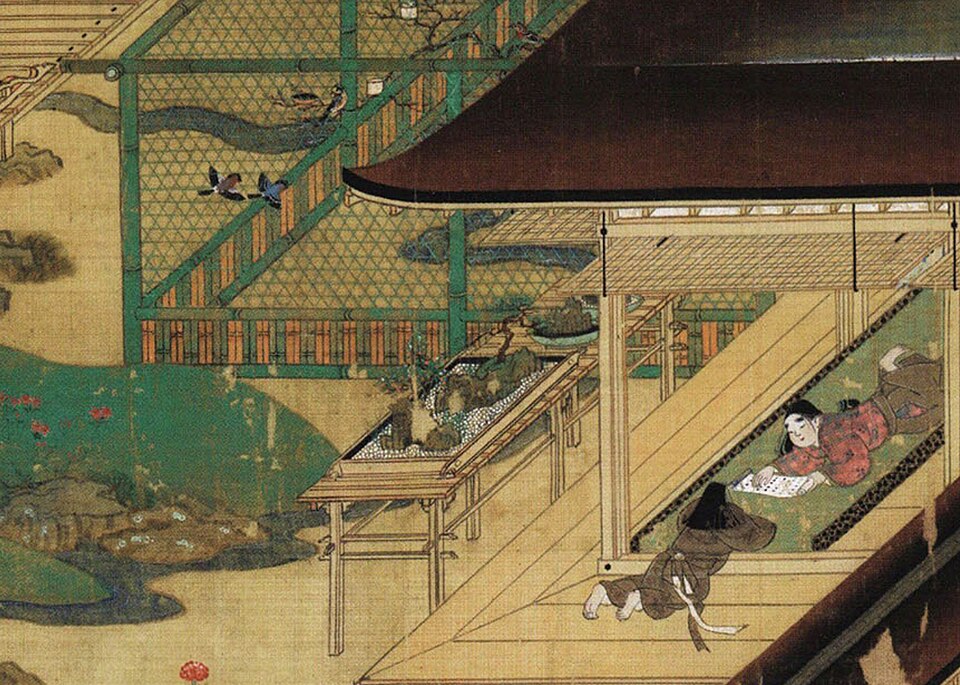
From about the year 1195, comes the earliest known depiction in Japan of a dwarfed potted tree. Saigyo Monogatari Emaki ( Biography of Monk Saigyo ) shows the deeds and experience of the poet-monk Saigyo. One section of the scroll has a dwarfed tree in a ceramic container, a hobby and status symbol of the privileged class to which Saigyo (aka En-i, 1118-1190) belonged.
History of Bonsai in Japan
The history of bonsai in Japan began more than 1,000 years ago when the Chinese art of penjing was introduced through cultural exchanges, trade, and the spread of Buddhism. Japanese monks, scholars, and nobles admired these miniature landscapes and gradually adapted the practice to reflect their own artistic and spiritual traditions.
By the Kamakura Period (1185 to 1333), bonsai had become associated with Zen Buddhism, which emphasized simplicity, patience, and a deep appreciation of nature. Japanese artists shifted the focus from creating miniature landscapes to cultivating individual trees that expressed age, balance, and natural beauty. This evolution gave rise to the distinctive bonsai styles recognized today.
During the Edo Period (1603 to 1868), bonsai became increasingly popular among the samurai class, wealthy merchants, and gardeners. New techniques for pruning, wiring, and shaping trees were developed, allowing artists to create more refined and realistic designs. Bonsai exhibitions and collections became symbols of culture and status.
The art gained international attention in the late nineteenth and early twentieth centuries through world expositions and growing global interest in Japanese culture. Today, Japan is regarded as the spiritual home of bonsai, with renowned nurseries, museums, and exhibitions preserving centuries of tradition while inspiring enthusiasts around the world to cultivate these living masterpieces.
Thanks to Bonsai Empire for the above information.